
Need expert tree cabling and bracing long island ny? Call now for expert tree services!
Tree Cabling and Bracing Near You | At The Top Tree Service Corp
Last month, a customer in Garden City called us frantically after a storm. Their beautiful 80-year-old oak tree was leaning dangerously toward their house, and they thought they’d have to cut it down. Instead, we used tree cabling and bracing to save it. That tree is still standing strong today, and the family gets to keep their favorite shade spot for barbecues.
If you’re dealing with a tree that looks unstable, has multiple trunks, or survived storm damage, you might need professional tree cabling and bracing services. We’ve been helping Long Island families save their valuable trees for over 15 years, and we know exactly which trees can be saved and which ones pose too much risk.
Tree cabling and bracing is like giving your tree extra support when it needs help staying upright. Think of it as a brace for a broken arm – it holds everything in place while the tree gets stronger or prevents further damage.
We install cables between branches or trunks to reduce stress on weak areas. Bracing uses rigid rods to support split trunks or damaged areas. Both techniques help trees withstand wind, storms, and their own weight as they grow larger.
The process isn’t something you can do yourself with hardware store supplies. Professional tree cabling requires specific materials, proper tension, and knowledge about how trees grow and move in the wind. We use only galvanized aircraft cable and professional-grade hardware that meets industry standards.
Tree Cabling and Bracing Services We Provide
Emergency Tree Cabling and Bracing
When storms hit Long Island, we get calls from Massapequa to Montauk. Trees that seemed fine yesterday might suddenly have cracked trunks or hanging branches after high winds. Our emergency tree cabling and bracing service can often save trees that look doomed.
We respond quickly because waiting too long can make a tree unsaveable. If there’s a crack in the trunk or a major branch is hanging loose, every day counts. We’ve saved countless trees that other companies said needed to be removed completely.
Preventive Tree Support Systems
Smart property owners don’t wait for problems. We install preventive cabling systems on healthy trees that have risk factors – like multiple trunks, heavy branch loads, or previous storm damage that healed over.
In areas like Babylon and Huntington, we see a lot of mature trees that developed co-dominant trunks. These trees look fine until a storm creates stress between the trunks. Installing cables before problems start costs much less than emergency services or tree removal.
Tree Bracing for Split Trunks
When a tree trunk splits but hasn’t completely separated, rigid bracing can often save it. We drill through both sides of the split and install threaded rods that hold everything together while the tree heals.
This technique works especially well on fruit trees and ornamental trees that homeowners want to keep for sentimental reasons. We’ve braced apple trees in Riverhead that are still producing fruit 10 years later.
Multi-Point Cable Systems
Large trees with multiple weak points need complex support systems. We design custom cable networks that distribute stress across the entire tree canopy. These systems require careful planning and professional installation.
Every tree is different, so we evaluate each situation individually. Factors like species, age, health, and location all affect how we design the support system. A maple tree needs different support than an oak, and coastal trees face different stresses than inland ones.
Why Long Island Trees Need Extra Support
Living on Long Island means your trees face unique challenges. Salt air from the ocean affects tree health along the coast. Nor’easter storms bring heavy, wet snow that breaks branches. Summer thunderstorms with straight-line winds can snap healthy trees in half.
The soil conditions vary dramatically across the island. Sandy soil in eastern areas doesn’t hold roots as firmly as clay soil further west. Trees in sandy areas are more likely to lean or uproot during storms.
Hurricane season brings another set of problems. Even if we don’t get direct hits, the sustained winds from offshore storms stress trees for hours. That’s when weak branch unions fail and split trunks separate.

Signs Your Tree Needs Cabling or Bracing
Most homeowners aren’t sure when a tree needs professional support. Here are the warning signs we look for during consultations:
Cracks in the trunk, especially vertical splits that go deep into the wood. These often start small but grow larger every year. We’ve seen hairline cracks turn into complete trunk failures within a single growing season.
Multiple trunks growing from the same point create weak unions. As trees get bigger, the weight pulls these trunks apart. V-shaped connections are weaker than U-shaped ones.
Heavy branches that extend far from the trunk put stress on the connection point. Large horizontal branches are especially prone to failure during storms or under snow loads.
Previous storm damage that wasn’t properly addressed. Trees are good at healing over broken areas, but the healed spot is often weaker than the original wood.
Lean that developed after the tree was established. If a tree starts leaning as it matures, there’s usually a reason – root damage, soil erosion, or structural weakness.
Dead or dying wood in the canopy increases stress on healthy parts of the tree. When branches die, their weight becomes dead load that doesn’t bend with the wind.
Our Tree Cabling and Bracing Process
We start every job with a detailed tree assessment. Our certified arborists examine the entire tree, not just the obvious problem areas. Root condition, overall health, and future growth patterns all factor into our recommendations.
Sometimes cabling isn’t the right solution. If a tree is too diseased or damaged, removal might be safer and more cost-effective. We give honest assessments because we care more about your safety than making a sale.
When cabling is appropriate, we develop a custom plan for your specific tree. Cable placement, tension, and hardware selection depend on tree species, size, and the type of support needed.
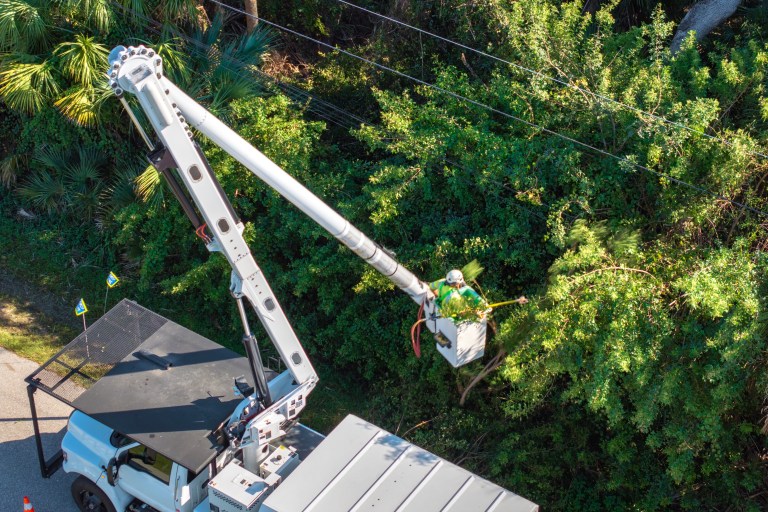
Installation requires specialized equipment and training. We use bucket trucks to reach high attachment points safely. All cables are installed with proper hardware that won’t damage the tree as it grows.
After installation, we provide maintenance recommendations. Trees continue growing after cabling, so periodic inspections help ensure the system stays effective. Most cable systems last 10-15 years with proper care.
Cost Factors for Tree Cabling and Bracing
Several factors affect the cost of tree support systems. Tree size is the biggest factor – taller trees require more expensive equipment and take longer to cable properly.
The number of cables needed varies with each tree. Simple two-point systems cost less than complex multi-cable networks. Emergency work typically costs more than scheduled installations.
Access to the tree affects pricing. Trees close to power lines, buildings, or in tight spaces take more time and specialized equipment. We factor in all site conditions when providing estimates.
Tree health impacts the complexity of the work. Diseased trees might need dead wood removal before cabling. Some trees need multiple visits to complete the work safely.
Geographic location on Long Island can affect costs. Jobs in remote eastern areas or areas with difficult access might have higher transportation costs.
Maintaining Your Tree Support System
Professional tree cabling isn’t a “set it and forget it” solution. Trees continue growing and changing after cable installation, so regular maintenance keeps the system working properly.
We recommend annual inspections for most cabled trees. During inspections, we check cable tension, hardware condition, and overall tree health. Small adjustments made early prevent bigger problems later.
Tree growth can affect cable systems over time. As branches get bigger, cables might need repositioning or tension adjustment. New growth might create interference with existing cables.
Weather damage requires immediate attention. After major storms, we inspect all our cabled trees to ensure the systems are still working properly. Storm damage to cables or hardware needs prompt repair.
Frequently Asked Questions
How long do tree cables last?
Most professional cable systems last 10-15 years with proper maintenance. The galvanized steel cables resist corrosion, and quality hardware holds up well in Long Island weather conditions.
Will cables damage my tree?
Properly installed cables don’t harm healthy trees. We use specialized hardware that accommodates tree growth. Cables that are too tight or improperly installed can cause damage, which is why professional installation matters.
Can any tree be cabled?
Not all trees are good candidates for cabling. Trees that are too diseased, damaged, or structurally compromised might be safer to remove. We evaluate each tree individually to determine if cabling will be effective.
Do I need permits for tree cabling?
Most Long Island municipalities don’t require permits for tree cabling, but some have restrictions about work near power lines or in wetland areas. We handle permit requirements when necessary.
Will my insurance cover tree cabling?
Insurance coverage varies by policy and situation. Some policies cover preventive tree care, while others only cover storm damage repair. We provide detailed invoices that include all necessary documentation for insurance claims.
Emergency Tree Services
Storm damage doesn’t wait for business hours. When trees fail during storms, they can block driveways, damage property, or create safety hazards. We provide 24-hour emergency response for dangerous tree situations throughout Long Island.
Emergency tree cabling is often possible even after partial failure. Trees that have split trunks or major branch failures can sometimes be saved with immediate professional intervention. Quick response often makes the difference between saving a tree and losing it completely.
We coordinate with utility companies when storm damage involves power lines. Never attempt to move tree branches that are touching electrical wires – call the power company first, then call us for safe tree removal or stabilization.
Serving All of Long Island
Our tree cabling and bracing services cover all of Nassau and Suffolk counties. From the Five Towns to Montauk Point, we’ve worked in every community on Long Island.
Each area has unique challenges. Coastal properties deal with salt spray and hurricane winds. Inland areas have different soil conditions and weather patterns. We adapt our techniques to local conditions and requirements.
Regular service areas include Hempstead, Oyster Bay, North Hempstead, Glen Cove, Long Beach, Babylon, Huntington, Islip, Smithtown, Brookhaven, Riverhead, Southampton, East Hampton, and Shelter Island.
Contact Us for Tree Cabling and Bracing Services
Don’t wait until your valuable trees fail completely. If you notice signs of structural weakness, storm damage, or instability, contact us for a professional assessment.
We provide free consultations for tree cabling and bracing services throughout Long Island. Our certified arborists will evaluate your trees and recommend the most appropriate solutions for your situation and budget.
Call today to schedule your tree assessment. Protecting your trees protects your property value and keeps your family safe. Professional tree cabling and bracing services give you peace of mind knowing your trees have the support they need to weather Long Island’s challenging conditions.
Offices
Head Office
We are located right off Sunrise Hwy in Shirley, our office isn't open to the public, however, you can call us to schedule a free estimate!
917 Montauk Hwy Shirley, NY
Phone: (516)-315-5716
