
Need expert tree mulching long island ny? Call now for expert tree services!
Tree Mulching Near You | At The Top Tree Service Corp
Last spring, a customer in Hampton Bays called us in a panic. Her beautiful oak trees were struggling, the soil around them was bone dry, and weeds were taking over her entire front yard. After we provided professional tree mulching services, those same trees bounced back stronger than ever. That’s the power of proper mulching – it’s not just about making your property look neat.
Tree mulching in Long Island NY has become one of our most requested services, and for good reason. Between our harsh winters and unpredictable summers, Long Island trees face unique challenges. The right mulching technique protects your trees year-round while saving you money on water bills and endless weeding.
Many homeowners think mulching just means dumping wood chips around trees. That’s like thinking painting a house just means slapping color on walls. Real tree mulching involves understanding soil conditions, tree species, and Long Island’s specific climate challenges.
We’ve been mulching trees across Nassau and Suffolk counties for over a decade. Every property is different – the sandy soil in the Hamptons needs different mulching techniques than the clay-heavy areas in central Long Island. Trees in Massapequa face different wind patterns than those in Port Jefferson.
Proper tree mulching starts with removing old, decomposed mulch that can harbor pests or diseases. We then apply fresh organic mulch at the right depth – typically 2-4 inches – keeping it away from direct contact with tree trunks. This prevents moisture retention against bark, which can cause rot and attract insects.
The mulch we use comes from locally sourced hardwood trees. This isn’t the dyed stuff you see at big box stores. We’re talking about natural wood chips that break down slowly, adding nutrients to your soil over time. Pine bark mulch works great for acid-loving trees like dogwoods and azaleas. Shredded hardwood mulch is perfect for most Long Island native trees.
Benefits You'll See Right Away
Most clients notice the difference within weeks. Weeds stop sprouting around trees because quality mulch blocks sunlight from reaching weed seeds. Your trees retain moisture longer, meaning less frequent watering during those brutal July heat waves we get here on Long Island.
Tree roots stay cooler in summer and warmer in winter. This temperature regulation helps trees handle stress better. A well-mulched tree can survive drought conditions that would seriously damage unmulched trees.
Mulching also prevents soil compaction. Heavy rains won’t wash away topsoil around your trees. Instead, water penetrates slowly and evenly, reaching deep root systems where trees need it most.

Tree Mulching Process for Long Island Properties
We start every mulching job with a property assessment. Different areas of Long Island have different soil conditions and drainage issues. Properties near the water in areas like Babylon or Patchogue often have sandy soil that drains too quickly. Inland areas might have clay soil that holds too much water.
Our team removes any existing mulch that’s become compacted or started breaking down into soil. Old mulch can create a barrier that prevents water and air from reaching tree roots. We also check for any pest issues or diseases that might be hiding in old mulch.
Next comes soil preparation. Sometimes we need to add compost or other organic matter to improve soil structure. Properties that use a lot of salt for ice removal often need soil amendments to neutralize salt damage around trees.
The mulch application itself requires precision. Too little mulch won’t provide benefits. Too much mulch creates what we call “volcano mulching” – piling mulch against tree trunks like a volcano. This kills more trees on Long Island than most diseases.
We spread mulch evenly in a ring extending to the tree’s drip line when possible. For mature oaks or maples, this might mean mulching an area 20-30 feet across. The mulch should be deeper at the outer edges and gradually decrease as it approaches the trunk.
Seasonal Mulching Considerations
Long Island’s climate means timing matters for tree mulching. Spring mulching, typically done in April or May, prepares trees for summer heat. This is when we refresh mulch around most trees, adding new material as needed.
Fall mulching happens in October or November. This timing helps trees prepare for winter while taking advantage of falling leaves that can be chopped and mixed with wood mulch. Fall mulching also means spring cleanup is much easier.
Some trees benefit from winter mulching touch-ups, especially newly planted trees or those in exposed locations. Areas like Montauk or other coastal locations often need extra winter protection.
Summer mulching usually involves spot treatments rather than full applications. We might add mulch around trees that are showing drought stress or areas where weeds have broken through.
Common Long Island Mulching Mistakes
We see the same mistakes over and over across Long Island properties. Volcano mulching – piling mulch against tree trunks – probably kills more trees than any disease. Mulch should never touch tree bark directly.
Using the wrong type of mulch causes problems too. Fresh grass clippings decompose too quickly and can heat up enough to damage shallow roots. Colored mulches often contain chemicals that can harm soil microorganisms trees depend on.
Many property owners spread mulch too thin. A thin layer looks neat but doesn’t provide the benefits trees need. On the other hand, mulch layers thicker than 6 inches can prevent water and air from reaching soil.
Not refreshing mulch annually means missing out on ongoing benefits. Organic mulch breaks down over time – that’s actually good because it adds nutrients to soil. But it needs replacement to maintain proper depth and weed suppression.
Mulching Different Tree Species
Oak trees, common throughout Long Island, benefit from coarser mulch that allows good air circulation around roots. Fine mulch can become too compact around oaks, especially in clay soil areas.
Maple trees prefer slightly acidic conditions, so we sometimes mix pine needles or oak leaves into their mulch. Maples also have shallow root systems that really benefit from consistent moisture mulching provides.
Evergreen trees like pines and spruces prefer acidic mulch. Pine bark or needles work great for these trees. We often see evergreens struggling in Long Island’s alkaline soil conditions, and acidic mulch helps balance pH levels.
Fruit trees need special consideration. Apple and pear trees common in Long Island yards benefit from mulch that’s kept several inches away from trunks to prevent pest issues. We also avoid using mulch from diseased trees around fruit trees.
Equipment and Materials We Use
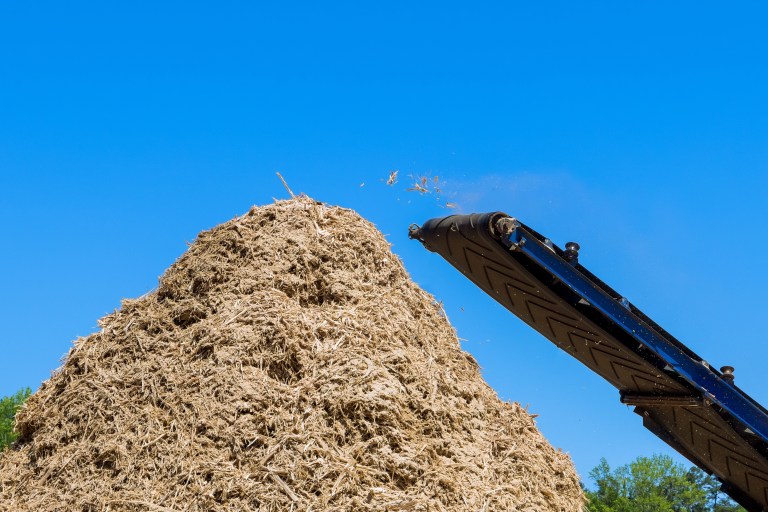
Professional tree mulching requires proper equipment. We use commercial-grade wood chippers to create fresh mulch on-site when removing trees or large branches. This saves clients money and provides the freshest possible mulch.
Our mulch spreaders distribute material evenly without compacting soil underneath. Hand spreading works for small areas, but larger properties need mechanical spreading to get consistent results.
We source hardwood mulch from local tree removal operations rather than importing mulch from unknown sources. This reduces the risk of introducing invasive pests or diseases to your property.
All our mulch is aged appropriately before application. Fresh wood chips can temporarily tie up nitrogen in soil as they begin decomposing. Aged mulch has already gone through initial decomposition stages.
Cost Factors for Tree Mulching Services
Tree mulching costs depend on several factors specific to Long Island properties. Property size obviously matters, but so does access. Properties in dense neighborhoods like Levittown might cost more due to limited equipment access.
Soil preparation needs affect pricing. Properties that haven’t been mulched in years often need more prep work. Sandy soils common near Long Island beaches might need different mulch types or depths.
The number and size of trees matters more than total property size. A property with several mature trees requires more mulch and labor than one with many small trees, even if the total mulched area is similar.
Distance from our base affects delivery costs. We’re based in central Long Island, so jobs in far eastern Suffolk County or the farthest western Nassau areas include additional travel time.
Year-Round Tree Health Benefits
Properly mulched trees show better resistance to Long Island’s common tree stresses. Salt damage from winter road treatments affects fewer mulched trees because mulch helps soil retain moisture that dilutes salt concentrations.
Summer drought stress is less severe in mulched trees. During the dry spells we typically see in July and August, unmulched trees often show leaf scorch or premature leaf drop. Mulched trees maintain healthy foliage longer.
Wind damage affects Long Island trees regularly due to our coastal location. Well-mulched trees develop stronger, more extensive root systems that anchor them better during storms.
Pest problems are often reduced around properly mulched trees. Many soil-dwelling pests prefer bare soil or areas where organic matter is lacking. Healthy mulch promotes beneficial organisms that compete with harmful pests.
Working with Long Island Landscaping
Tree mulching integrates well with overall landscape design common in Long Island properties. We coordinate with landscapers to create cohesive looks that incorporate mulched tree areas with lawn and garden spaces.
Many Long Island properties feature foundation plantings that benefit from mulching techniques similar to those used for trees. We often extend tree mulching into shrub and perennial areas for consistency.
Mulch color and texture can complement hardscaping elements like stone walls or patios common in Long Island landscaping. Natural hardwood mulch works with almost any design style.
Seasonal plantings like the spring bulbs popular in Long Island can be incorporated into mulched tree areas. The mulch actually protects bulbs during winter and makes spring emergence easier.
Environmental Benefits
Tree mulching supports Long Island’s environmental goals in multiple ways. Organic mulch sequesters carbon as it decomposes, contributing to climate change mitigation efforts.
Water conservation becomes increasingly important on Long Island due to our sole-source aquifer concerns. Mulched trees need less supplemental watering, reducing demand on groundwater supplies.
Mulching reduces the need for chemical fertilizers around trees. As organic mulch breaks down, it provides slow-release nutrients that feed both trees and beneficial soil organisms.
Pest control benefits from mulching too. Healthy, mulched trees are more resistant to diseases and insect damage, reducing the need for pesticide applications.
Getting Started with Professional Tree Mulching
The best time to start a mulching program is now, regardless of season. Long Island’s variable climate means trees face stress year-round, and mulching provides benefits in every season.
We recommend starting with your most valuable or vulnerable trees. Newly planted trees, trees near paved areas that get salt exposure, and trees showing signs of stress should be priorities.
A comprehensive mulching plan considers your entire property’s needs. We develop multi-year plans that address different areas as budgets allow while maintaining the most critical tree areas annually.
Contact us for a free assessment of your property’s tree mulching needs. We’ll identify priority areas and provide recommendations specific to your trees and Long Island location. Every property is different, and cookie-cutter approaches don’t work for Long Island’s diverse growing conditions.
Offices
Head Office
We are located right off Sunrise Hwy in Shirley, our office isn't open to the public, however, you can call us to schedule a free estimate!
917 Montauk Hwy Shirley, NY
Phone: (516)-315-5716
